This post may contain affiliate links to items I love, and I am confident you will too! All opinions are my own, however, I may receive a small commission on purchases. As an Amazon Associate I earn from qualifying purchases. For any health advice I give on nutrition and weight loss, make sure you check with your doctor, as I am not a health professional.
Introducing your baby to solid foods is an exciting milestone for the entire family. It’s not only fun for the baby to explore new foods and textures; they are beginning the lifelong process of healthy eating habits. There are many options; whether you start with the common baby foods from the store or homemade purees, you’ll want to ensure you are providing a wide variety of nutritious foods to your baby.
This is where the ‘100’ first foods come in. Introducing a variety of foods is the best way to ensure your baby gets all of the essential nutrients needed, and it’s a great way to develop their palate, hopefully avoiding having picky eaters in the future. This article will guide you on the order in which foods to phase in and why. We will also include a free printable list of the 100 First Foods to help you during this exciting journey. By the end of this post, we hope you feel confident and ready to start feeding your baby a wide variety of foods.

When to Start Solids
When is the perfect time to start solids? Regardless of which route you go, traditional weaning vs. baby-led weaning, the American Academy of Pediatrics recommends exclusively feeding breast milk or formula up to 6 months of age. However, every baby is different, so it’s important to speak with a qualified healthcare provider before introducing those first foods. Check out our previous post for a complete guide to baby-led weaning. There are also numerous resources online, such as this free online workshop.
When your baby starts showing readiness signs like sitting up on their own in a high chair, showing interest in family meals, and swallowing food without the tongue-thrust reflex, your baby is ready to try solids. Once you get physician approval, pull out our 100 First Foods list and create some simple starter foods for your baby. It’s essential to start slow for the first time with something simple like a baby food or a sweet potato puree. Mashed-up bananas and avocados are another safe start in introducing foods.
You can gradually introduce finger foods when they pick up items and place them in their mouth. There are so many easy recipes online for traditional or baby-led feeding. You’ll want to provide a variety of different textures, like smashed butternut squash, apple puree, or small wedges of watermelon. Getting babies comfortable with different textures and new tastes helps minimize picky eating when they’re older.
Food Allergies
Watching your baby grow up and start eating solids is exciting but can also be stressful, especially for a new mom. We’ve all seen and heard those scary stories about food allergies. Children’s most common food allergies are peanuts, eggs, and cow’s milk. Please take a look at the Food and Drug Administration website for more information on food allergies.
Monitoring for allergic reactions can be nerve-racking, so it’s best to speak to your child’s pediatrician about how best to introduce high-allergy foods. A good rule of thumb is to introduce a new single-ingredient food every three days and monitor for any reactions like rashes or diarrhea. Keep a list of food your baby has eaten, and be very observant when introducing a common allergen food like peanut butter. It is also recommended that two people be present in case of a medical emergency.
If you find that your child may have an allergy to a particular food or foods, you will want to consult your child’s doctor on how best to handle it. Depending on the severity, they may suggest treatment recommendations like allergy drops or shots. They may also refer you to a registered dietitian who can help map out meal plans to ensure your child’s diet includes all the nutrients needed. Dieticians are also great for helping with other concerns like issues with weight gain or a particular medical condition.
Time to Eat
So you have your baby food chart out and are ready to create some meals. As mentioned before, starting small is a good idea; it only takes a little to fill those little tummies. Follow your baby’s lead. They may be ravenous eaters one day and other days, not so much. Either way, you don’t need to overthink it; have some fun.
When you are filling out your grocery list and working on your family meal planning, consider what foods you can share with your little human. You don’t have to buy additional food specifically for your baby; you can just set aside some single-ingredient foods while preparing your family meals. This is also a good way to save money by having less food waste.
Is it burger and french fry night? Opt for sweet potato fries and set aside some soft baked slices for baby’s meals. Taco night? Diced avocado and shredded cheese are great table foods. You do not need to buy all the fancy homemade baby food cookers and gadgets; simply baking, steaming, and boiling different foods at no extra cost is the way to go. Just watch for added sugar and monitor sodium levels in processed foods. It’s best to keep it simple with single-ingredient foods.
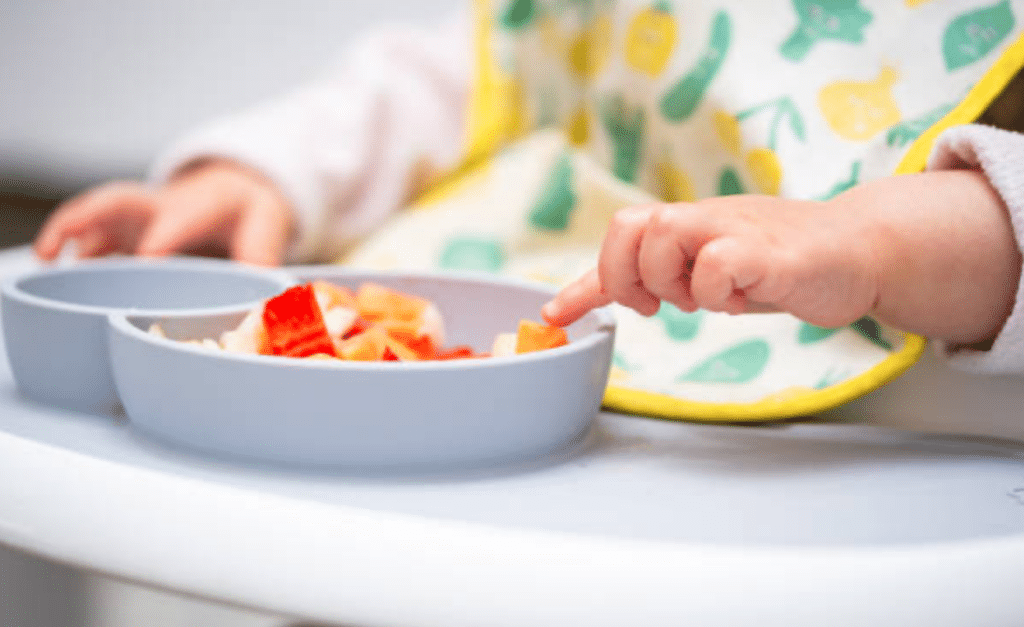
During the first year, explore creating different meals so your baby is exploring a variety of food. There are a few foods and liquids you’ll want to avoid giving them until they’re older. Fruit juice, hot dogs, whole grapes, popcorn, chunks of cheese, and meats are best given after their first birthday.
This also includes certain citrus fruits (like oranges, lemons, grapefruits, etc.), which can cause acid reflux, diaper rash, and upset tummies due to their high acidic levels. As always, consult your medical provider on what type of food is recommended for your baby at their specific age.
Other Tips and Simple Recipes
When heading to the grocery store, you may be short on time or have forgotten your list. Here is a list of essential foods to keep in mind. Keep this list handy on your phone as a reminder of what everyday food items to purchase.

- Protein: Eggs, soft meats, fish, lentils, beans, tofu, yogurt
- Fruits: Avocado, banana, apples
- Vegetables: Sweet potato, carrots, squash, peas
- Grains: Oatmeal, brown rice
- Other: Cinnamon and olive oil
Our go-to basics for the entire family (even the dogs) are eggs, avocados, brown rice, and fish. Fatty fish like salmon are a great source of omega-3 fatty acids, which is excellent for a baby’s brain development. Here are some simple recipes to get you started, but be sure to check out our ultimate guide on the 100 First Foods for Baby.

Breakfast
Breakfast can be one of the more challenging meals to make. Whether you’re in a rush to get out the door for work or you’ve had to get up several times during the night to feed your baby, cooking a meal first thing in the morning may feel like a daunting task. However, with some prep, breakfast can be a quick and easy meal for the entire family. Check out these easy breakfast recipes below. These meals are also great for lunch and dinner.
- Omelet and Banana – Eggs are an excellent protein source; you can add veggies and cheese or keep it plain. Beat an egg and pan-fry it until cooked thoroughly. Cut it into strips and add some sliced banana.
- Avocado Toast – Avocado is another excellent food with many healthy fats. While waiting for the toast, smash up some avocado with a fork. You can add some formula or breastmilk to make it thinner. Spread the avocado on some toast and cut the toast into strips.
- Sweet Potato Yogurt – You can make your own sweet potato puree or use premade baby food. This is a great meal that you can make ahead of time. If you made sweet potato fries for dinner, throw some leftovers in a blender with water and blend. Add a little yogurt and store it in the refrigerator for the morning. If you’re headed out the door in the morning, store your yogurt in reusable food pouches. These are great for snacking and on-the-go meals.
Lunch
You’ll want to continue offering different flavors and textures for lunch and dinner. So, depending on what you serve for breakfast, try to provide something entirely different for lunch. But really, at the end of the day, a well-rounded meal is the most important goal to focus on. Soups are one of my favorite meals to serve. You can incorporate grains and veggies and it’s another meal the whole family can enjoy. Soups are also great for using leftovers. Take your leftover chicken, add carrots and celery, and boil away. Toss in some whole-grain noodles and bingo. Finally, add some sliced fruits or chunks of cheese to complete the meal.
Dinner
Dinner is a great time to explore new foods with the baby. Usually, the entire family is together, and the baby can observe all the different foods their parents and siblings are eating. Like all meals, a healthy variety of proteins, grains, veggies, and fruit is recommended. One of my go-to’s is a salmon dinner – Flakey salmon mixed in with some quinoa and shredded cheese is a tasty and healthy meal for babies. Add some zucchini, steamed broccoli, and fruit; you’ve hit all the food groups.
There are so many options for introducing 100 first foods to your baby. You can keep it easy and simple or get creative with elaborate recipes. Whatever route you choose, have fun on this messy and delicious adventure. Take lots of pictures and videos. And remember to check out our free 100 First Foods printable. Bon appetit.
This article contains information for educational and informational purposes only and is not intended to substitute for professional medical advice.